8 Weeks on the Global Stage -
Frontier Stars in Silicon Valley
August 8, 2025
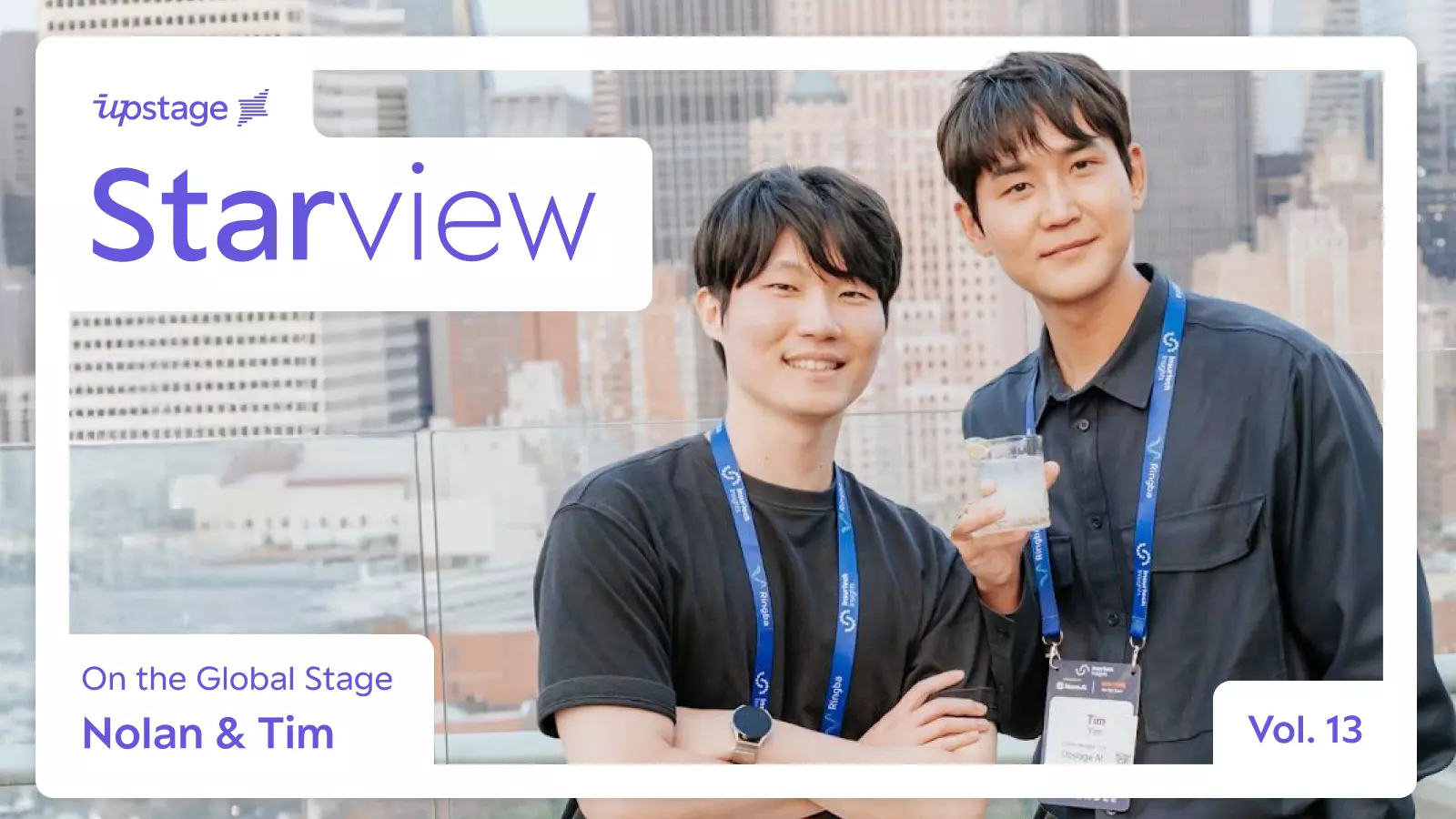
The Frontier Star Program began with a simple belief: “Everyone should have the opportunity to work on the global stage.”
Through stories of meeting customers in Silicon Valley and helping grow a product firsthand, we invite you to experience the culture of Upstage.
The First Step Toward the Global Stage: The Frontier Star Program
Last May, as Upstage celebrated the first anniversary of its U.S. office, we launched a new opportunity to accelerate global expansion together with great talent—the U.S. Frontier Star Program, a global work opportunity open to everyone.
Unlike traditional overseas assignments limited to certain roles, the program was designed so that anyone who wanted to work in a
global environment could apply.
Under the slogan “Be a Key Player in Upstage’s U.S. Expansion,” we invited applications from Upstage Stars who wished to work in
San Francisco. Since Upstage already operates with an AOEBT (Anywhere on Earth, But Together) culture of global remote work, the
program felt like a natural extension of that philosophy. Selection was based not on English proficiency or experience, but on attitude
and passion—people who seriously wanted to engage with the U.S. market and actively drive change.
Applicants submitted a 30-second video sharing their aspirations, and Tim and Nolan were ultimately selected.In Silicon Valley, they
took on a wide range of responsibilities—from product planning and customer interviews to meetup operations and local networking.
“A powerful pitch of an Upstage product.”
“Showing off your extreme skills in using AI tools like Cursor.”
“Presenting a game-changing strategy for entering the U.S. market.”
Over the next eight weeks in Silicon Valley, they took on a wide range of responsibilities—from product planning and customer
interviews to meetup operations and local networking.
Growing Through Real-World Experience in Silicon Valley
Letting Go of the Familiar and Stepping into the Field
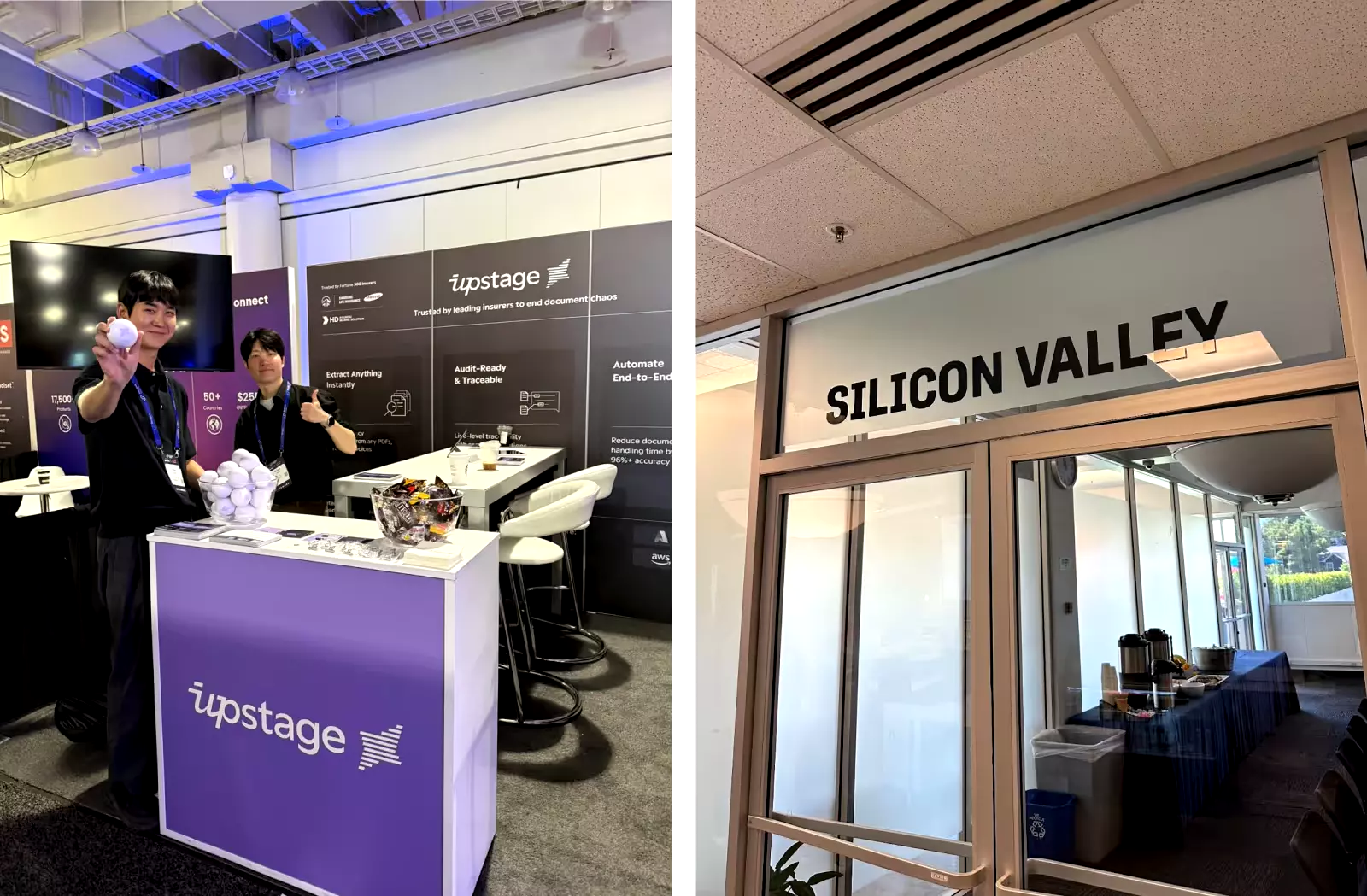
Q. Could you tell us about your role during the U.S. assignment?
Tim: Our main mission was to ensure that Upstage’s products could be used seamlessly in the global—especially the U.S.—market.
It was a rare and valuable opportunity to meet real AI Space customers, interview them directly, and observe how they actually use
the product. My key goal was to identify customer pain points and incorporate their feedback into the product as quickly as possible.
At the same time, being in the U.S.—the fastest-moving AI market—allowed us to experience emerging trends firsthand.We tried to
translate those insights into the product so that AI Space could evolve along with the market.
Nolan: My first focus was developing effective demos that could clearly showcase Upstage’s technology to U.S. customers.
Based on feedback from those demos, we then worked on evolving them into real product features.
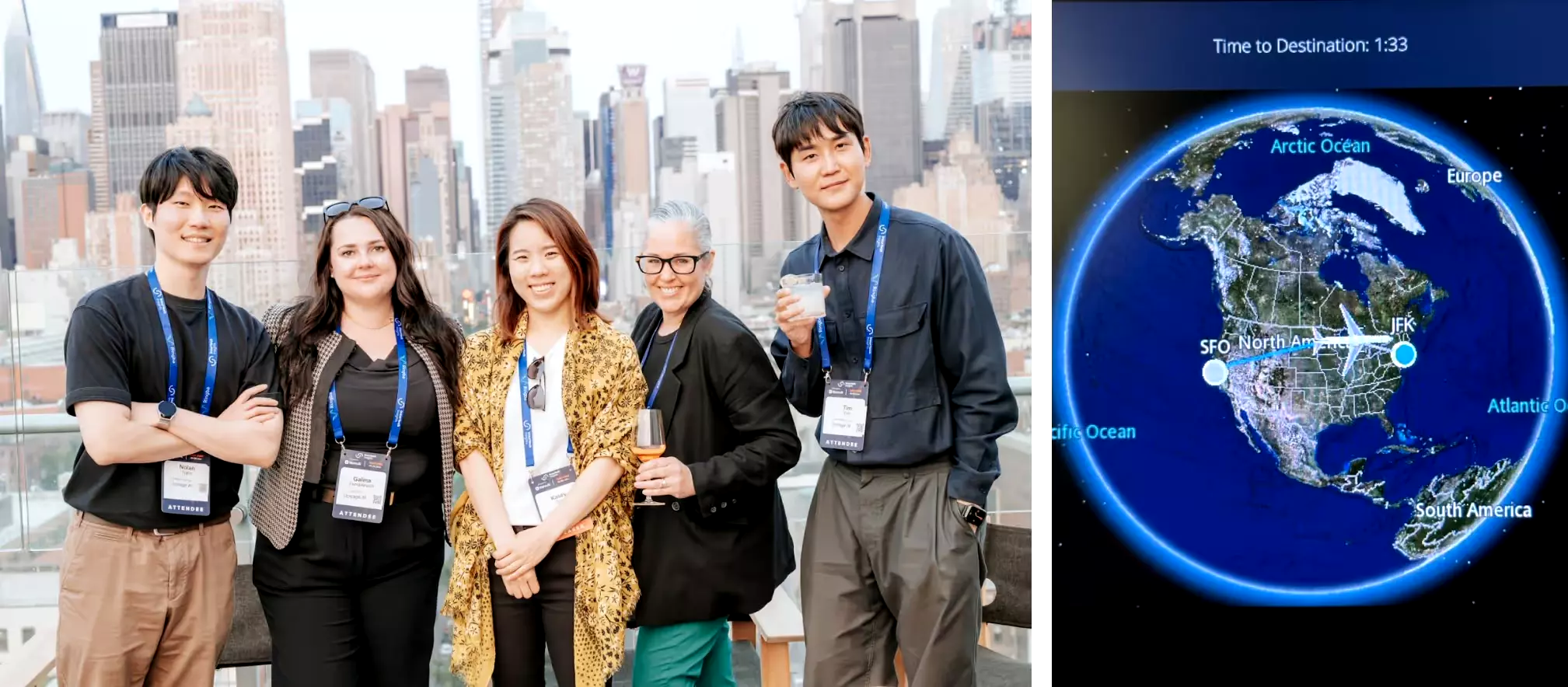
Q. What kinds of questions did people ask when you introduced AI Space in the U.S.?
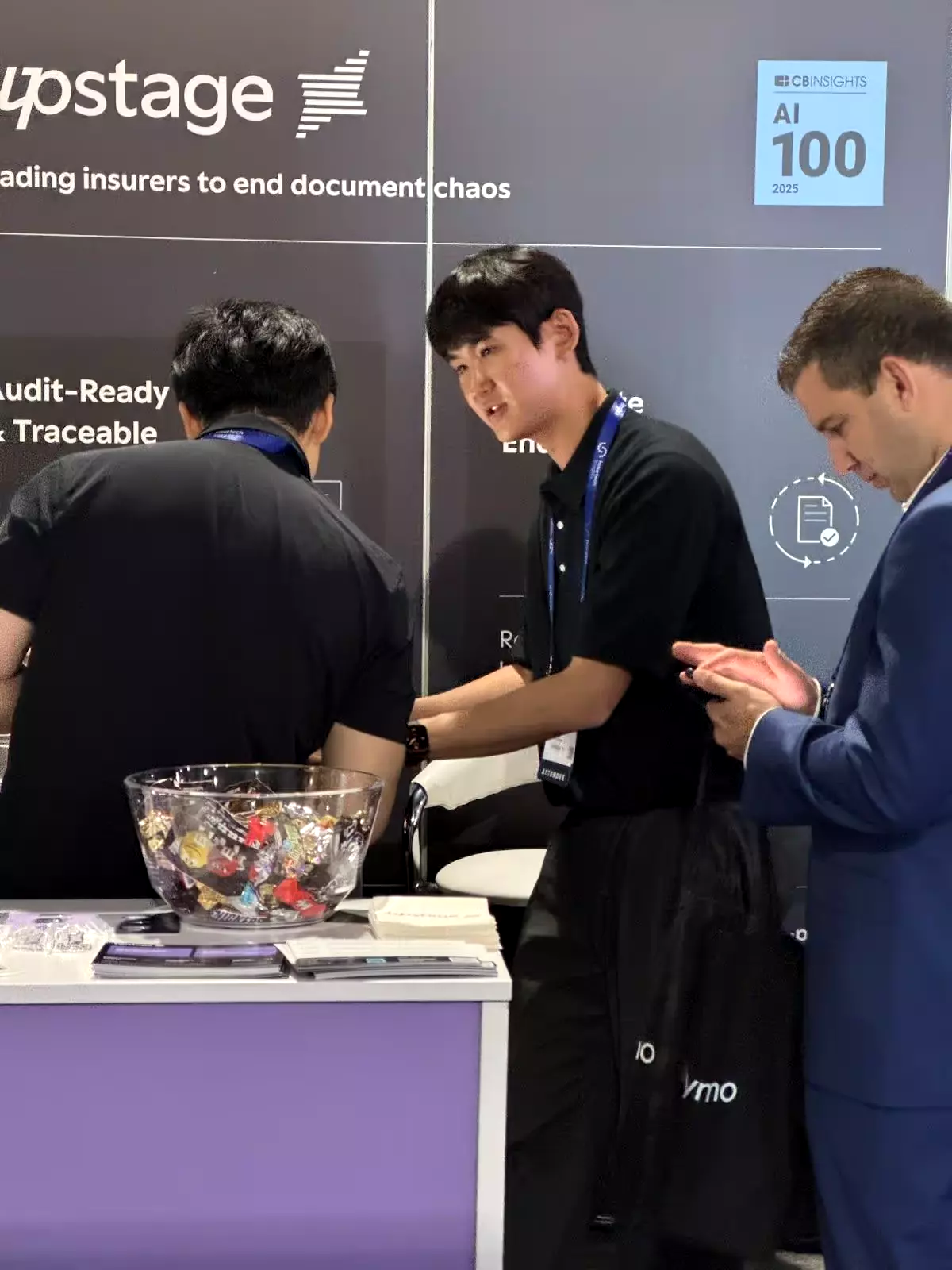
Tim∙Nolan: Upstage has already achieved meaningful success in Korea, but in the U.S. we are still a young startup just beginning our journey. Because of that, we often received questions about our differentiation and strengths compared to other startups.
We usually answered by demonstrating the real performance of our models, along with sharing our achievements in B2B domains.
Seeing the strong interest in our Korean use cases—and even discussions about adoption in the U.S.—gave us a lot of confidence
about the product’s potential.
Q. Were there moments when you incorporated real customer feedback into the
product?
Nolan: At one point we had built a file browser feature that required a lot of effort—but eventually we removed it entirely.
The feature had been built more for our own convenience than for the customer’s real needs, and we realized it didn’t actually solve
any meaningful problem.
On the other hand, the Instruction feature came directly from customer feedback. We had internally discussed the idea but hadn’t
implemented it yet because the demand wasn’t fully validated. However, during conversations with customers in InsurTech, we
discovered that many of them were describing problems that this feature could solve. That was the clear signal we needed—so we
developed and deployed it within a single day.
Tim: AI Space is extremely powerful once you get used to it, but there is a learning curve in the beginning.
When we demonstrated the product directly to customers and showed how it could solve their problems, the response was incredibly positive.
However, we also noticed that some users struggled with how to get started in real usage environments, especially in industries less
familiar with IT tools. Based on that observation, we quickly improved parts of the onboarding flow and introduced example projects to help users adapt more easily.
Q. Any memorable moments from meetups, events, or customer interviews?
Nolan: One thing that stood out was learning that many U.S. insurance companies carry a special type of coverage called “Errors and Omissions (E&O) insurance.” It protects them from lawsuits caused by mistakes or omissions in their documentation. That really
highlighted how much opportunity still exists to improve efficiency in document-related workflows.
Even though the U.S. is a leader in the AI industry, the market is so large and diverse that many inefficiencies still remain—and that
means opportunities. There are many AI solution companies locally, but not many that combine strong technical capability with a
proven track record. That made us confident that Upstage’s technology and success in Korea could absolutely resonate in the U.S.
market. 🤩
Tim: One particularly memorable moment was when a customer at an InsurTech event experienced AI Space firsthand.
After watching the demo, they asked if they could upload their own documents and try it themselves, requesting a special session.
Seeing a customer immediately solve a real problem using the product was incredibly rewarding—and it reinforced the impact of what we’re building.
.png.webp)
Q. What was it like collaborating with the U.S. team?
Tim : During our time there, we worked right next to executives like Sung Kim and Lucy, discussing product direction and meeting
customers together. Watching leadership listen directly to customers and deeply reflect on their feedback helped me understand the
product’s vision much more clearly. Rather than feeling like “executives,” they felt like teammates building the product alongside us.
That kind of flat, product-driven culture is one of Upstage’s biggest strengths. Working with Kasey and Galina, who are passionately
leading sales in the U.S., was also very inspiring. Celebrating small wins together and constantly pushing toward bigger goals truly
embodied the startup spirit.
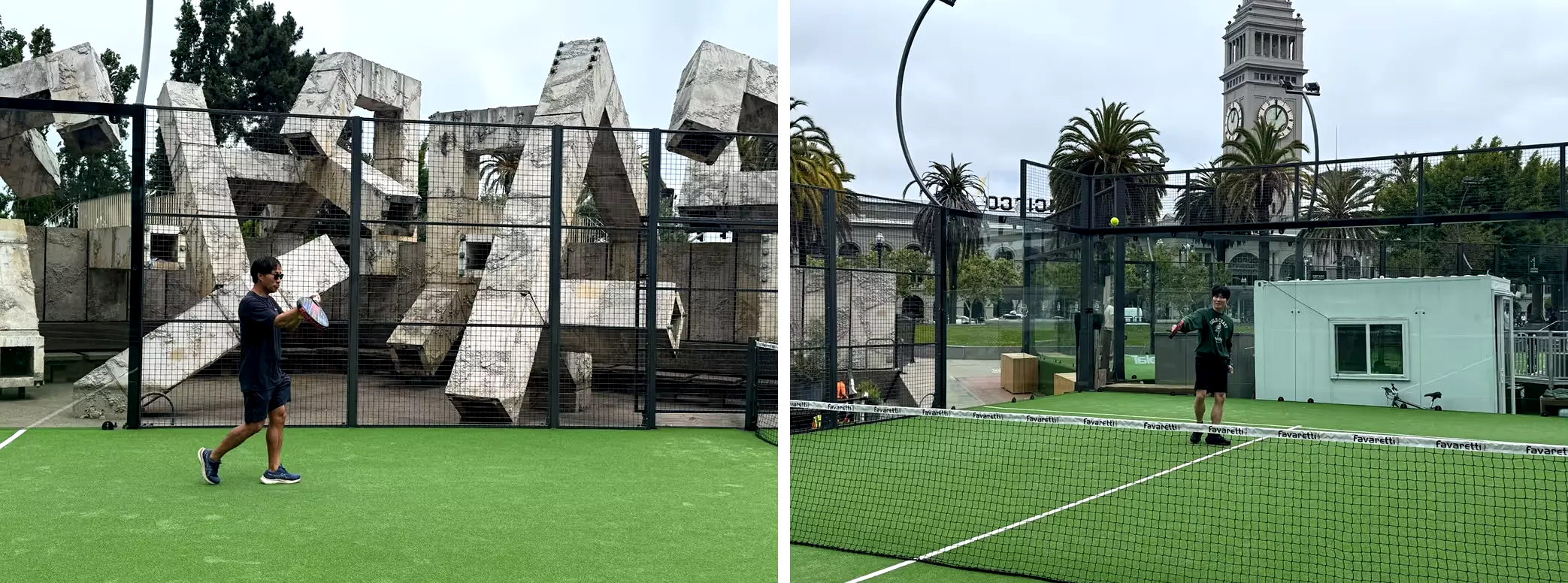
Nolan: I also spent a lot of time exercising with Sung Kim—running and playing pickleball. In San Francisco, sports are actually a form
of networking.
Through those activities, I met people from different startups and had natural conversations about the market and potential collaborations. It taught me that relationships are just as important as technology in the U.S. market.
New Inspiration Was Closer Than We Expected
A Shift in How We Work and Connect
.png.webp)
Q. What differences did you notice between the U.S. and Korean work environments?
Nolan: The biggest difference was being able to hear customer feedback directly. When you’re far away from customers, feedback
can sometimes become distorted or lose context along the way. In the U.S., we could hear their voices firsthand and immediately
reflect that insight in the product.
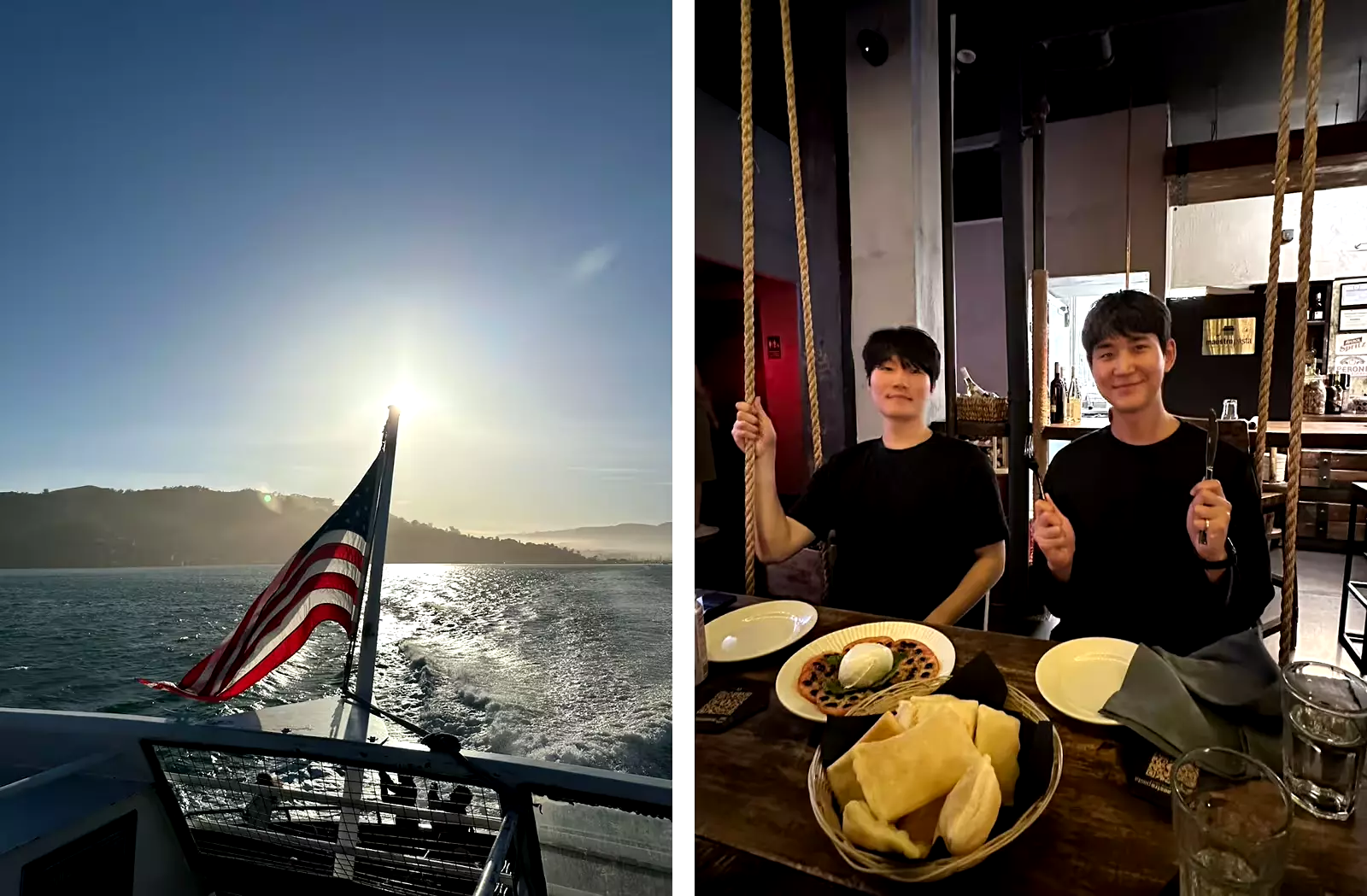
Also… the weather was amazing.Clear skies almost every day. Watching the sunset after work is still one of my favorite memories.
Tim: San Francisco is full of startups and entrepreneurs who are deeply passionate about what they do.
In Korea, I had already experienced fast execution and strong focus, but in the U.S. it felt like that passion was simply part of everyday
life. People naturally embrace new challenges and aim to create meaningful impact in the world.
Q. Was there a moment that particularly inspired you while working in San Francisco?
Tim: At AI networking events, people passionately discuss cutting-edge technologies, future possibilities, and real problems that need solving. Work isn’t just treated as a job—it’s something exciting and meaningful. That kind of energy and openness was incredibly
inspiring.
.png.webp)
Nolan: Living in San Francisco made me realize how quickly the world is changing.
Even on my first day, driving on the highway, I noticed that billboards everywhere were advertising AI services. And almost every
evening there were AI meetups where people gathered to discuss new technologies.
One unforgettable experience was riding Waymo’s fully autonomous taxi. Even in complex situations, the car smoothly avoided
obstacles and drove confidently. Technologies that still feel distant in Korea were already part of everyday life in San Francisco.
It truly felt like getting a glimpse of the future.

Q. Did your time in San Francisco lead to any personal growth or changes in perspective?
Tim: I believe people become more colorful through different encounters and experiences, almost like adding new colors to a canvas. San Francisco felt like a city that added many new colors to mine.
Seeing people break away from conventional thinking and pursue their goals with passion in such an open and energetic environment was incredibly inspiring. It made me feel even more motivated to create meaningful impact with the product we’re building.
Through the many conversations and connections I had during this trip, I feel like I gained a broader perspective and a renewed sense of passion.
Nolan: The experience made me realize that I want to live more proactively moving forward.
San Francisco is full of entrepreneurs, as well as immigrants who came to the U.S. in search of new opportunities. Everyone seemed to have their own dreams and direction, actively carving out their future. Seeing that made me reflect on myself as well.
I realized that instead of simply settling into the environment I’m given, I want to take a more active role in shaping my own future.
Continuing the Journey Toward the AI Frontier
Q. After returning to Korea, did your experience change the way you approach your
work?
Tim: After returning from the U.S., my perspective on the product has broadened significantly.
When planning or improving even a single feature, I now consider a wider range of customers and use cases. I naturally find myself
thinking more about how we can create a larger impact through the product.
Nolan: More than anything, I gained a lot of confidence—especially confidence in Upstage.
I became convinced that we are in a strong position to solve the problems U.S. customers are facing. Seeing their reactions during this trip reminded me just how impressive Upstage’s technology and track record truly are.
Knowing that I’m surrounded by such capable teammates also gave me a stronger sense of responsibility—like I simply need to keep pushing myself to do even better.
Q. What are your plans for the second half of the year?
Tim∙Nolan: In the second half of the year, we plan to introduce AI Space more actively to the global market and launch new features
that help users handle document-based work more efficiently. Our goal is to help more people reduce their workload with AI Space so they can focus on more meaningful tasks.
📍 Curious about AI Space, shaped by Tim and Nolan’s insights? Join the waiting list today and try it yourself.
Q. Do you have any advice for the next Frontier Star heading to the U.S.?
Tim: There may be moments at first that feel unfamiliar or even intimidating, but in the end, the experience will make you stronger.
What matters more than language is your attitude and determination.Introducing a product you’ve built to people in a different culture and market is an irreplaceable opportunity for growth.
Rather than trying to be perfect, I think it’s more valuable to treat every moment as a chance to learn.
Nolan: A new environment may feel unfamiliar at first, but you’ll come back with far more than you expect.
Through interacting with many different people, you’ll naturally find yourself growing along the way. If worries start to creep in, try
setting them aside and focus on the excitement instead. All you really need to bring is confidence.
Oh—and don’t forget a jacket. San Francisco is windier than you might expect!
The eight-week journey was far more than a business trip. It was an intense experience that gave us the opportunity to reflect on
products, technology, change, people, and culture.
Upstage’s global journey continues. And we look forward to seeing the next Frontier Star take another step forward on the global
stage.